

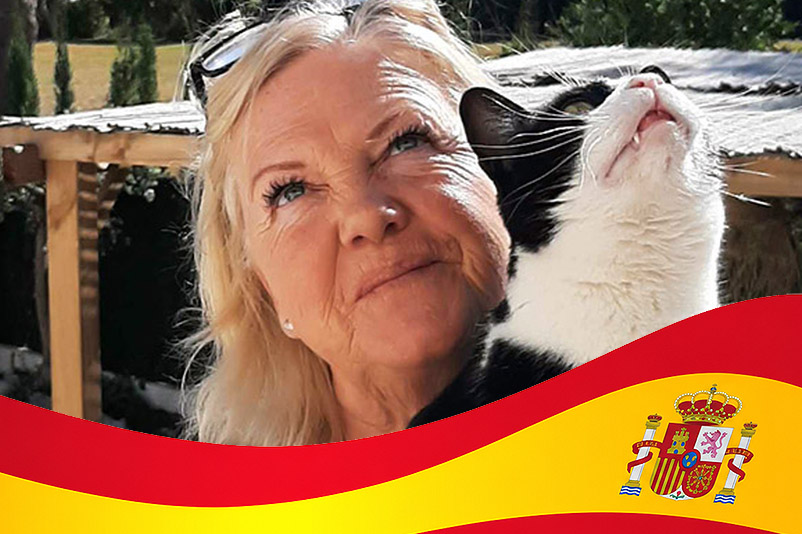
Spain introduced a new Animal Welfare Law in 2023 to improve the protection of animals and help reduce abandonment. The law covers many different topics, but what does it actually mean for cat owners?
This guide explains the main points that affect people who own, adopt, foster, or care for cats in Spain. It is intended as a simple overview and should not be considered legal advice.
Why Was the Law Introduced?
Every year, thousands of animals are abandoned across Spain. Many end up in shelters, rescue organisations, or living on the streets.
The law was introduced to encourage responsible pet ownership and improve animal welfare. One of its main goals is to reduce abandonment and prevent unwanted litters.
For organisations like Catland Jávea, these goals are especially important. Many of the cats we help were once somebody’s pet.
Microchipping Your Cat
One of the most important responsibilities of cat ownership is making sure your cat can be identified.
Under Spanish law, pet cats must be microchipped and properly registered. Unlike some countries, Spain does not have a single national microchip database. Instead, each autonomous community has its own registry. In the Valencian Community, this is RIVIA, and only authorised veterinarians can register or update your cat’s details. You can update your own address and telephone number if your contact details change.
If you move to another autonomous community or change your contact details, make sure your new vet updates your registration.
A microchip can make the difference between a happy reunion and a cat that never finds its way home. We have dealt with several cases of cats being found hundreds of miles away, including as far away as Barcelona.
We strongly encourage all cat owners to ensure their cat is microchipped and that their contact details are always kept up to date.
Sterilisation and Preventing Unwanted Litters
Preventing unwanted litters is a key part of the law.
Unwanted litters are one of the main reasons so many cats end up abandoned or living on the streets.
Under current Spanish legislation, cats that are not registered as breeding animals must generally be sterilised before six months of age. As with any medical procedure, a veterinarian may occasionally advise delaying sterilisation for health reasons.
Sterilisation not only helps prevent unwanted kittens, but it also provides important health and behavioural benefits for many cats.
Read more: Why You Should Sterilise Your Cat
Rabies Vaccination
National laws are not the only rules cat owners need to be aware of. Regional regulations may also apply.
In the Valencian Community, rabies vaccination is mandatory for dogs, cats, and ferrets.
The vaccination must be given by a veterinarian and recorded in your pet’s health documentation.
If you live in another region of Spain, local requirements may be different, so it is always worth checking with your veterinarian.
Deworming
In the Valencian Community, regular deworming is also mandatory for cats.
At least one treatment per year is required, although your veterinarian may recommend more frequent treatment depending on your cat’s lifestyle and risk factors.
Regular deworming helps protect your cat from internal parasites and helps protect other animals and people too.
If you are unsure when your cat was last treated, speak with your veterinarian.
Abandoning a Cat Is Illegal
Abandoning an animal is a serious offence.
Unfortunately, thousands of animals are still abandoned every year.
At Catland Jávea, we regularly deal with cases of abandonment. Cats are sometimes left behind when owners move house, return to their home country, or can no longer care for their pet due to changing personal circumstances, financial difficulties, or health problems.
Others are abandoned when they become ill or need veterinary treatment.
Leaving a cat to fend for itself is not only cruel, it is also against the law.
The law also introduced tougher penalties for animal abuse, neglect, and abandonment. Animal welfare is being taken more seriously than ever before, and substantial fines may apply in cases of neglect, abuse, or abandonment. The most serious cases can also result in criminal prosecution.
If you can no longer care for your cat, seek help from local rescue organisations, veterinarians, or animal welfare groups before considering abandonment.
Providing Proper Care
Owning a cat comes with responsibilities.
Cat owners are expected to provide:
- Access to food and clean water.
- Suitable shelter and protection from extreme weather.
- Veterinary care when needed.
- A safe environment.
- Protection from unnecessary suffering.
Owning a cat is a long-term commitment. Cats depend on us for food, shelter, healthcare, and protection throughout their lives.
Buying, Selling and Breeding Cats
The law introduced additional rules relating to breeding and the sale of animals.
One of the changes introduced by the law is that the sale of dogs, cats, and ferrets in pet shops is no longer permitted.
The goal is to reduce irresponsible breeding and prevent animals from being treated as disposable products.
For most cat owners, the message is simple: avoid accidental litters and consider adoption when looking for a new pet.
Many wonderful cats and kittens are already waiting for homes.
What About Street Cats?
Community cats are now formally recognised under Spanish law.
The law also recognises that simply removing cats from an area does not solve the problem.
Instead, the preferred approach is TNR (Trap-Neuter-Return). Under TNR programmes, cats are humanely trapped, sterilised, and returned to their territory.
In the Valencian Community, community cats managed through authorised colony programmes are identified with a microchip, vaccinated against rabies, and issued with an official passport. As with pet cats, a veterinarian may occasionally advise delaying part of the process for medical reasons.
TNR improves the lives of community cats and helps prevent more unwanted kittens from being born.
Does the Law Apply Everywhere?
The Animal Welfare Law applies throughout Spain.
However, autonomous communities and municipalities may have additional regulations relating to identification, vaccinations, colony management, and animal welfare.
For example, the Valencian Community has additional regulations covering rabies vaccination, deworming, health documentation, and companion animal health requirements.
For this reason, it is always worth checking local requirements if you are unsure.
Catland’s View
At Catland Jávea, we welcome the Animal Welfare Law and the greater protection it provides for animals. However, we believe responsible pet ownership goes beyond simply meeting the minimum legal requirements.
In addition to microchipping, sterilisation, rabies vaccination, and deworming, we strongly recommend keeping your cat’s core vaccinations up to date. For most cats, this includes the trivalent vaccine, which helps protect against Feline Herpesvirus and Feline Calicivirus (the two main causes of cat flu), as well as Feline Panleukopenia (feline distemper).
We also recommend vaccination against FeLV (Feline Leukaemia Virus), particularly for cats that have outdoor access or may come into contact with other cats. Last but not least, we advise appropriate flea and tick treatments when needed.
Preventive healthcare helps keep cats healthy, reduces the spread of disease, and can prevent more serious problems later on. All cats cared for by Catland Jávea receive the trivalent and FeLV vaccinations, deworming, and flea and tick treatment as part of our healthcare programme.
If you are unsure which vaccinations or parasite treatments are right for your cat, local clinics such as Catland’s veterinary clinic, Clínica Veterinaria Asís, can advise on the best approach for your individual cat.
Final Thoughts
The law was introduced to improve the lives of animals across Spain and encourage responsible pet ownership.
The legal details may seem complicated, but the message is simple: microchip your cat, prevent unwanted litters, provide proper care, keep vaccinations and deworming treatments up to date, and never abandon an animal.
At Catland Jávea, we welcome measures that help reduce abandonment, support responsible ownership, and improve the lives of cats.
Together, we can create a better future for both pet cats and community cats throughout Spain.
Further Reading
If you would like to dive deeper into the legislation, you can find the following documents online:

